From Source to Faucet: 7 Emerging Contaminants Threatening Your Municipal Water Supply
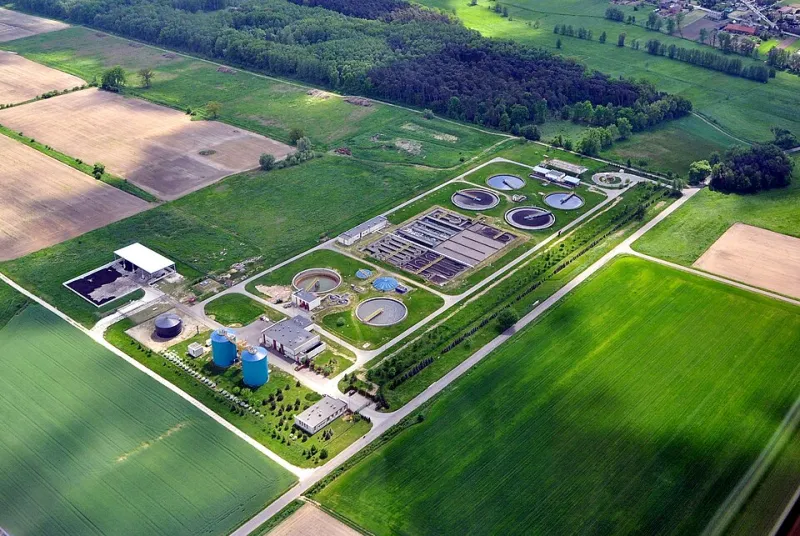
Photo: Stiopa, CC BY-SA 3.0, via Wikimedia Commons
The phrase "municipal water treatment" conjures reassuring images of technological competence: filtration systems, chemical disinfection, rigorous testing. And in many respects, the United States does maintain a water treatment infrastructure that is the envy of much of the world. The Safe Drinking Water Act, first enacted in 1974, established the foundational legal architecture for protecting public water supplies, and the Environmental Protection Agency has used it to regulate hundreds of contaminants over the past five decades.
Yet the regulatory machinery moves slowly—far more slowly than the pace at which new chemical compounds enter the environment, accumulate in source water, and ultimately arrive at the treatment plants that were never designed to remove them. The result is a growing gap between what Americans believe their water contains and what independent science increasingly suggests it may.
What follows is not intended to alarm, but to inform. Each of the threats examined below is real, documented by peer-reviewed research, and—critically—addressable through both individual awareness and collective advocacy.
1. PFAS: The Chemicals That Refuse to Leave
Per- and polyfluoroalkyl substances, collectively known as PFAS, have earned the sobriquet "forever chemicals" for a straightforward reason: their carbon-fluorine bonds are among the strongest in organic chemistry, rendering them effectively indestructible under normal environmental conditions. Manufactured since the 1940s for applications ranging from nonstick cookware to firefighting foam, PFAS compounds have now contaminated drinking water sources serving an estimated 200 million Americans, according to research published by the Environmental Working Group.
The health implications are serious and accumulating. Studies have linked long-term PFAS exposure to increased risk of certain cancers, thyroid disruption, immune system suppression, and developmental harm in children. In April 2024, the EPA finalized the first-ever national drinking water standard for six PFAS compounds, establishing a maximum contaminant level of 4 parts per trillion for PFOA and PFOS—a landmark regulatory action that will require thousands of water utilities to upgrade their treatment systems.
What you can do: Check whether your utility is required to test for PFAS under the new EPA rule, and request access to the results. Utilities are required to notify customers of detected levels. Activated carbon filtration and reverse osmosis systems are among the treatment technologies capable of reducing PFAS at the point of use.
2. Pharmaceuticals and Personal Care Products
Every day, Americans flush medications down toilets, excrete pharmaceutical metabolites, and wash personal care products down drains. Conventional wastewater treatment removes many of these compounds—but not all of them, and not consistently. Antidepressants, synthetic hormones, antibiotics, and anti-inflammatory drugs have been detected in rivers and streams across the country by the U.S. Geological Survey, and trace concentrations of some compounds have been identified in finished drinking water.
The ecological consequences are already measurable: feminization of fish populations exposed to synthetic estrogens has been documented in the Potomac River and elsewhere, and antibiotic resistance in aquatic bacteria is an emerging concern with direct implications for human health. The long-term effects of chronic low-dose pharmaceutical exposure on humans remain incompletely understood, but the precautionary logic is compelling.
What you can do: Dispose of unused medications through DEA-authorized take-back programs rather than the drain or trash. Advocate for your local wastewater treatment authority to invest in advanced treatment technologies, including ozonation and advanced oxidation processes, which are more effective at degrading pharmaceutical compounds.
3. Microplastics: An Invisible and Ubiquitous Presence
Microplastics—particles smaller than 5 millimeters in diameter—have been detected in drinking water sources, finished tap water, and bottled water alike. A 2018 study commissioned by Orb Media and conducted at the State University of New York at Fredonia found microplastic contamination in tap water samples from cities across the United States, including New York, Los Angeles, and Chicago.
The health implications of ingested microplastics are still under active investigation, but concern is mounting. Plastic particles can carry adsorbed chemical pollutants and may provoke inflammatory responses in tissue. The EPA has not yet established regulatory limits for microplastics in drinking water, and standard treatment processes—coagulation, flocculation, sand filtration, and chlorination—vary considerably in their effectiveness at removing particles across different size ranges.
What you can do: Reduce single-use plastic consumption to limit environmental loading. Support municipal investment in membrane filtration technology, which is among the most effective available methods for microplastic removal. Urge your congressional representatives to support EPA research and eventual regulatory action on microplastics in drinking water.
4. Lead: A Legacy Contamination Problem That Persists
The Flint, Michigan water crisis brought the issue of lead in drinking water to national consciousness with devastating clarity. But Flint was not an anomaly—it was a particularly acute manifestation of a widespread infrastructure problem. The EPA estimates that there are between 6 and 10 million lead service lines still in use across the United States, delivering water to homes and schools where lead can leach directly into the supply.
Lead exposure causes irreversible neurological harm in children, with no established safe threshold. The Biden administration's Lead and Copper Rule Improvements, finalized in 2024, require water utilities to replace all lead service lines within 10 years—an ambitious and overdue mandate that will require substantial federal investment to execute.
What you can do: Use the EPA's drinking water data tool to determine whether lead has been detected in your community's water supply. If you live in an older home, consider having your water tested independently through a state-certified laboratory. A pitcher-style filter certified to NSF/ANSI Standard 53 for lead reduction can provide meaningful protection while infrastructure replacement proceeds.
5. Nitrates: Agriculture's Chemical Footprint in Rural Drinking Water
As discussed in the context of river hypoxia, nitrate contamination of water sources is a direct consequence of agricultural fertilizer application and livestock waste management. For communities that draw drinking water from wells or surface sources in agricultural watersheds, nitrate represents a direct and measurable health threat—particularly for infants, in whom elevated nitrate levels interfere with oxygen transport in the bloodstream, causing a condition historically known as "blue baby syndrome."
The EPA's maximum contaminant level for nitrate in drinking water is 10 mg/L, a standard that thousands of community water systems, particularly in the Midwest, have struggled to consistently meet.
What you can do: If you use a private well in an agricultural area, test your water annually for nitrates. Advocate for stronger state-level agricultural nutrient management regulations and support watershed-scale conservation programs that reduce nitrate loading at the source.
6. Disinfection Byproducts: The Unintended Consequences of Treatment
Chlorination—the cornerstone of municipal water disinfection—is one of the most consequential public health interventions in American history, dramatically reducing waterborne illness. But chlorine does not react with water in isolation. When it contacts naturally occurring organic matter in source water, it forms a class of compounds called disinfection byproducts (DBPs), including trihalomethanes and haloacetic acids, some of which are classified as probable human carcinogens.
DBP formation is closely linked to source water quality: the more organic matter present—often a consequence of upstream nutrient pollution and algal growth—the greater the potential for byproduct formation during treatment. This creates an ironic dynamic in which degraded river water quality can increase the chemical risks associated with the very treatment processes designed to make that water safe.
What you can do: Letting tap water sit in an open pitcher for several minutes before drinking allows volatile DBPs to dissipate. More substantively, support policies that protect source water quality upstream of treatment plants—because cleaner source water requires less aggressive disinfection and produces fewer harmful byproducts.
7. Industrial Solvents and Emerging Organic Contaminants
1,4-Dioxane, trichloroethylene (TCE), and a range of other industrial solvents have contaminated groundwater and surface water sources in communities near manufacturing facilities, dry cleaners, and military installations across the country. Many of these compounds are known or suspected carcinogens, and some are resistant to conventional treatment processes.
The EPA's Superfund program has identified thousands of contaminated sites nationwide, but cleanup proceeds slowly and incompletely. Communities of color and low-income communities are disproportionately located near contaminated industrial sites—a dimension of environmental injustice that demands explicit acknowledgment in any honest accounting of water quality threats.
What you can do: Access the EPA's Envirofacts database to identify regulated facilities and Superfund sites near your water source. Engage with your local environmental justice organizations, and demand that your state environmental agency prioritize cleanup resources in the communities bearing the greatest burden of industrial contamination.
Staying Informed Is the First Act of Advocacy
The Consumer Confidence Report—an annual water quality report that every community water system is legally required to provide to its customers—is your most immediate resource. It documents detected contaminants, their measured levels, and how those levels compare to regulatory limits. Reading it critically, and asking questions when results approach legal thresholds, is a simple and powerful act of civic engagement.
Beyond individual action, the most durable protection for drinking water quality comes from strong source water protection policies, adequately funded treatment infrastructure, and regulatory frameworks that evolve as quickly as the science demands. The Clean River Alliance is committed to advocating for all three—because the journey your water takes before it reaches your tap should be one you can trust completely.