Nature's Dam Builders: Why Beavers Are Outperforming Engineers at River Restoration
For most of the twentieth century, river restoration meant concrete, heavy machinery, and significant public expenditure. Engineers designed channel modifications. Contractors poured riprap along eroding banks. Federal agencies drafted multi-year remediation plans measured in millions of dollars and modest ecological returns. The results, while occasionally promising, rarely matched the complexity and resilience of what rivers once sustained on their own.
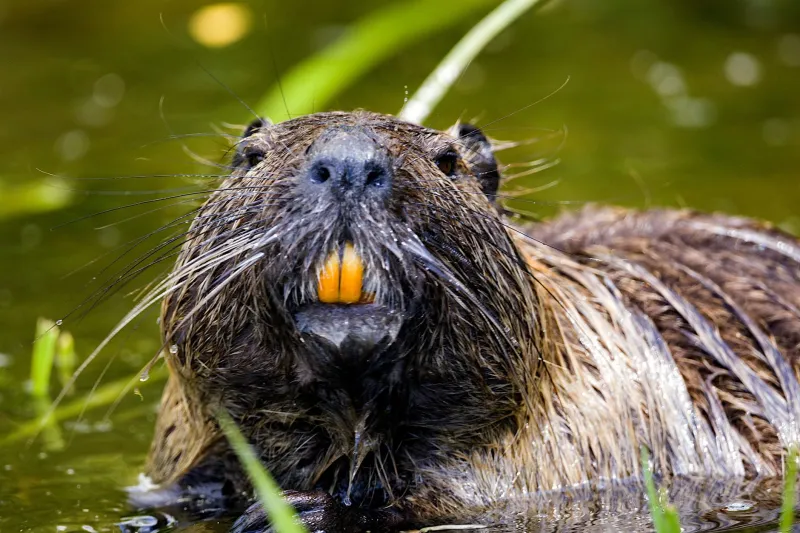
Now, a growing body of research is pointing toward a radically different approach—one that has been field-tested over millions of years. Across degraded stream corridors in Colorado, Oregon, Idaho, and beyond, wildlife managers and hydrologists are reintroducing Castor canadensis, the North American beaver, and documenting outcomes that challenge nearly every assumption underlying conventional restoration engineering.
The beaver, it turns out, is not merely a charismatic symbol of industriousness. It is a precision ecological instrument.
A Species Erased, a System Destabilized
To understand why beaver reintroduction matters so profoundly today, it helps to appreciate the scale of what was lost. Prior to European colonization, an estimated 60 to 400 million beavers inhabited North American waterways. Their dams and pond complexes shaped the hydrology of entire regions, slowing water movement, raising water tables, and creating the saturated meadow systems that once blanketed river valleys from the Rockies to the Appalachians.
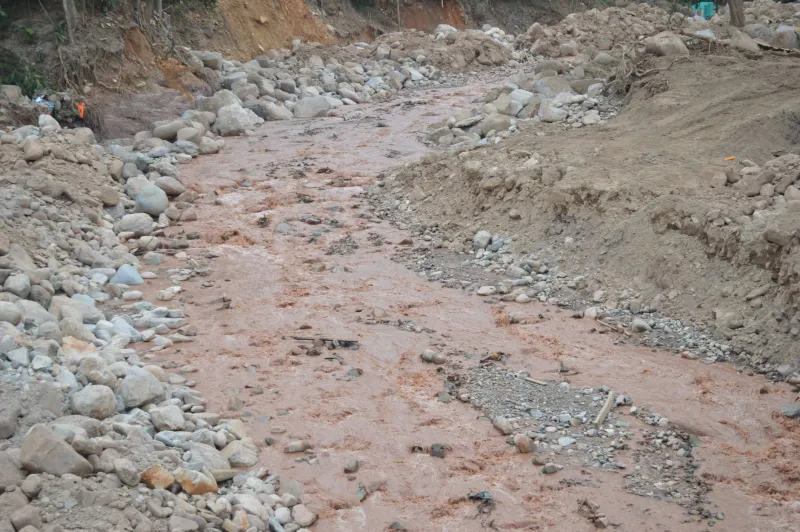
The fur trade nearly erased this infrastructure entirely. By the mid-nineteenth century, trapping pressure had reduced beaver populations to perhaps 100,000 animals across the continent. What followed was not simply a wildlife loss—it was a hydrological collapse. Without beaver-maintained ponds and wetlands, streams incised downward into their channels. Water tables dropped. Riparian vegetation dried out and retreated. Rivers that had once meandered slowly across broad floodplains began cutting steep, narrow trenches through the landscape.
Many of the degraded waterways that restoration programs now struggle to rehabilitate are, in a very direct sense, post-beaver landscapes.
What Beavers Actually Do—and Why It Works
The engineering logic of a beaver dam is deceptively simple. By impounding water, beavers raise local water tables, saturate adjacent soils, and create the wet conditions in which willows, sedges, and other riparian plants thrive. Those plants, in turn, stabilize banks, filter sediment, and provide the woody material that beavers harvest to expand their dams further. The system is self-reinforcing.
From a hydrological standpoint, the effects are remarkable. Research conducted in Colorado's Rio Grande headwaters has documented that beaver-occupied reaches retain significantly more water during drought conditions than comparable reaches without beaver activity. A 2019 study published in the journal Ecohydrology found that beaver ponds in the Sierra Nevada increased late-season streamflow—a finding of enormous consequence in an era of accelerating drought across the American West.
Beyond water storage, beaver activity measurably reduces downstream sediment loads, improves water temperature by shading stream channels, and dramatically increases habitat complexity for fish, amphibians, and invertebrates. In Oregon's John Day Basin, streams where beavers were reintroduced showed significant increases in juvenile steelhead density within just a few years—results that took traditional habitat enhancement projects far longer and far greater investment to approximate.
Programs Leading the Way
Colorado's Beaver Restoration Program, coordinated through Colorado Parks and Wildlife, has become one of the most closely watched reintroduction efforts in the nation. Working with private landowners and federal land managers, the program has translocated beaver families into degraded riparian corridors where the conditions for successful establishment—adequate food sources, appropriate channel gradients, and willing landowners—have been carefully assessed in advance.
In Oregon, the Confederated Tribes of the Warm Springs have incorporated beaver reintroduction into broader watershed restoration efforts, recognizing the animal's cultural significance alongside its ecological function. Their work along tributaries of the Deschutes River has demonstrated that community-led programs, grounded in Indigenous ecological knowledge, can accelerate restoration timelines considerably.
The Methow Beaver Project in Washington State offers perhaps the most comprehensive long-term dataset. Operating since 2008, the project has tracked beaver families relocated from conflict situations—where animals were destroying agricultural infrastructure—and placed them into priority restoration reaches. The results have been consistent: vegetation recovery, improved baseflows, and expanding wetland extent at costs that compare favorably to any engineered alternative.
Confronting the Obstacles
Beaver reintroduction is not without complications. Landowners adjacent to restoration sites sometimes object to flooding of agricultural fields or damage to irrigation infrastructure. In urban and suburban contexts, beaver activity can conflict with roads, culverts, and stormwater systems. These are legitimate concerns that require active management, including the use of flow devices—pipe systems installed through beaver dams that allow managers to regulate pond levels while preserving the broader ecological benefits of beaver presence.
Perhaps more significant is the institutional inertia within water management agencies. Decades of reliance on engineered solutions have shaped procurement processes, liability frameworks, and professional cultures in ways that do not easily accommodate a restoration strategy centered on wildlife behavior. Convincing a state water board to count on beavers rather than bulldozers requires a shift in how ecological outcomes are measured, valued, and guaranteed.
Yet that shift is quietly underway. The Bureau of Land Management has updated guidance documents to explicitly encourage beaver-assisted restoration where feasible. Several Western states have revised trapping regulations to protect relocated populations. And a new generation of restoration practitioners—trained in what practitioners sometimes call Beaver-Assisted Restoration, or BAR—is bringing interdisciplinary rigor to reintroduction planning.
Rethinking What Restoration Means
There is a deeper philosophical question embedded in the beaver reintroduction movement, one that Clean River Alliance believes deserves serious attention from policymakers and the public alike. Conventional restoration engineering tends to treat rivers as broken systems requiring human repair. Beaver-assisted restoration operates from a fundamentally different premise: that rivers retain the biological memory and ecological potential to heal themselves, provided the right species are present and given adequate protection.
This is not a romantic notion. It is supported by an expanding evidence base, documented across diverse geographies and hydrological conditions. It suggests that the most durable and cost-effective restoration investments may not be the ones that impose structure on a river, but the ones that restore the conditions under which rivers can rebuild their own structure.
For water managers confronting the compounding pressures of drought, climate variability, and diminished public budgets, that is a genuinely transformative insight. The beaver does not submit invoices. It does not require maintenance contracts or environmental compliance reviews. It simply builds—and in building, restores.
The rivers of the American West were shaped by this animal for millennia. There is compelling reason to believe they can be again.