Locked Banks, Starved Rivers: The Hidden Cost of America's War on Streambank Erosion
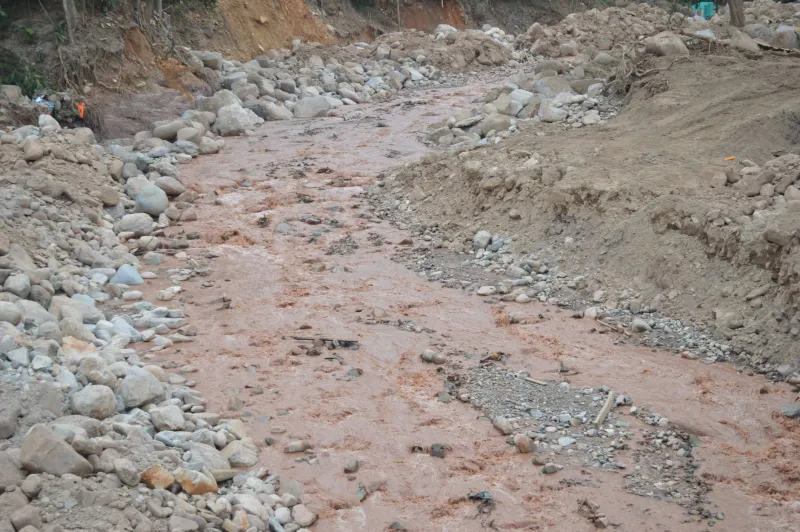
For much of the twentieth century, the dominant response to a crumbling riverbank was simple and decisive: harden it. Line it with riprap, pour concrete, drive steel sheet piling, and hold the line. The logic seemed sound—stop the bank from collapsing, and you stop the problem. What that logic failed to account for was the river itself, a dynamic system that does not simply accept intervention. It adapts. And in adapting, it often creates consequences far more costly than the erosion it was designed to prevent.
This is the central paradox of modern streambank management in the United States: the tools most commonly deployed to control erosion frequently accelerate sedimentation problems elsewhere, disrupting the natural sediment budget that rivers depend upon to maintain their channels, support their ecosystems, and deliver clean water to downstream communities.
The River as a Sediment Conveyor
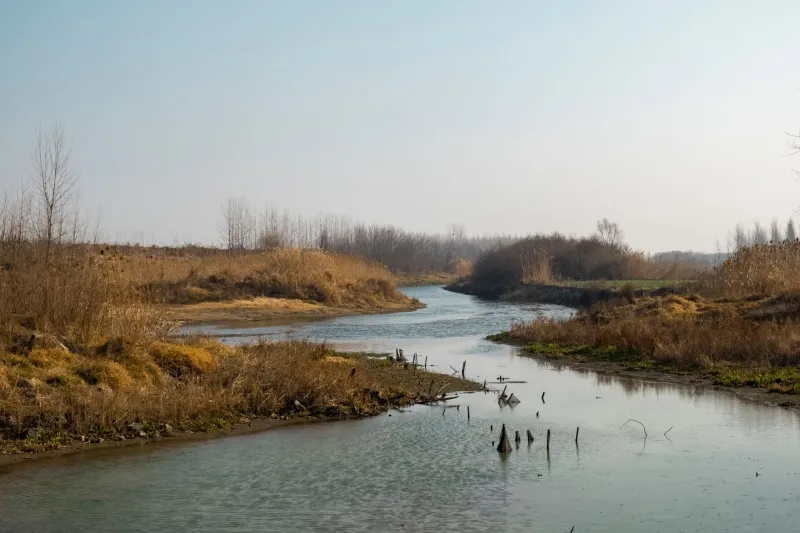
To understand why this paradox exists, it helps to think of a river not merely as moving water but as a sediment transport system. Every river exists in a state of dynamic equilibrium, continuously picking up particles—sand, silt, gravel, clay—from its banks and bed, carrying them downstream, and depositing them where energy diminishes. This process, governed by principles articulated in Lane's Balance and refined by decades of fluvial geomorphology research, is not incidental to a river's function. It is the function.
Sediment sustains gravel bars where birds nest and fish spawn. It builds floodplains that filter water and store carbon. It replenishes coastal deltas and maintains the channel geometry that keeps rivers navigable and flood-prone reaches manageable. When sediment moves freely, rivers are resilient. When that movement is interrupted, the system seeks a new equilibrium—often violently.
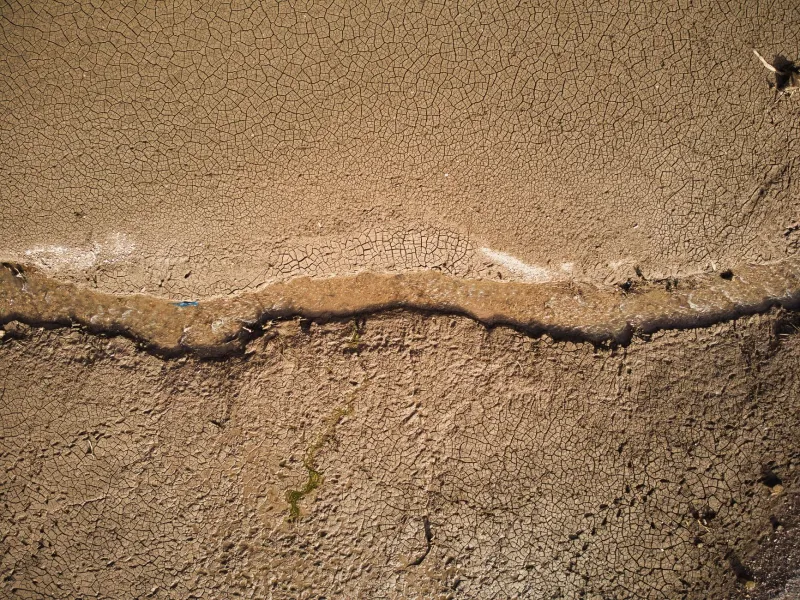
Armoring a riverbank does not eliminate erosion. It relocates and transforms it. A reach that can no longer recruit sediment from its banks becomes sediment-hungry. The river compensates by scouring its bed, cutting downward into the channel bottom in a process called incision. As the bed drops, bank heights increase, making those banks more vulnerable to collapse—often at unprotected reaches just downstream of the hardened section. Engineers have a name for this: the "end effect," and it is among the most reliably documented unintended consequences in river management.
Case Studies in Contradiction
The Lower Mississippi River offers perhaps the most dramatic illustration of this dynamic at national scale. Decades of levee construction and bank stabilization along the river's length have so thoroughly interrupted sediment delivery to the Gulf Coast that Louisiana is losing land at a rate of roughly a football field every hour. The sediment that once built and sustained the Mississippi Delta is now trapped behind dams and locked behind hardened banks far upstream. The delta is sinking; the coast is retreating. What was engineered as flood protection has contributed to one of the most severe land-loss crises in North American history.
Smaller-scale contradictions play out across the country with equal consistency. In the Sacramento Valley, channelization projects designed to speed floodwaters away from agricultural land have produced severe bed incision, dropping channel bottoms by several feet in some reaches and stranding riparian vegetation that can no longer access the water table. In the Midwest, urban streams armored with concrete to manage stormwater runoff deliver sediment pulses to downstream reaches during high flows, smothering spawning gravels and clogging municipal water intakes.
Perhaps most troubling are the cases where sediment control structures—check dams, retention basins, and grade control structures—trap sediment so effectively upstream that the reach below them becomes a hydraulic scalpel, cutting through alluvial material with renewed force. The structure solves one problem and manufactures another, often at greater public expense.
Who Bears the Cost?
The economic and ecological costs of this contradictory management approach are rarely assigned to a single ledger. Dredging operations to clear sedimented navigation channels cost the U.S. Army Corps of Engineers hundreds of millions of dollars annually. Infrastructure damage from bed incision—undermined bridge footings, collapsed utility crossings, failed water intake structures—runs into billions more across the country. Fisheries losses attributable to spawning habitat degradation impose costs on commercial and recreational fishing communities that are difficult to quantify but impossible to ignore.
Environmental justice dimensions compound the picture. Rural and low-income communities downstream of heavily managed river reaches frequently bear disproportionate burdens from sedimentation-related flooding and water quality degradation, with far fewer resources to advocate for corrective action or fund infrastructure repairs.
A Different Approach: Engineering With the River
The good news is that a generation of fluvial geomorphologists, restoration ecologists, and progressive water resource engineers has spent the past three decades developing alternatives that treat sediment not as a problem to be controlled but as a resource to be managed in partnership with natural processes.
Process-based restoration, sometimes called natural channel design, prioritizes restoring a river's ability to do its own work. Rather than armoring banks, practitioners may use techniques such as bank re-grading and native riparian plantings, which allow roots to stabilize soil while permitting the gradual, controlled lateral migration that keeps channels healthy. Engineered log jams—deliberately placed wood structures that mimic the function of fallen trees—slow water velocity, encourage sediment deposition in targeted areas, and create complex habitat without rigidly fixing the channel in place.
Bioengineering approaches, including live staking, brush mattresses, and coir fiber rolls seeded with native vegetation, have demonstrated comparable erosion control performance to hard armor in many low- to moderate-energy stream environments, at reduced cost and with substantially greater ecological benefit. These methods allow the bank to breathe—to recruit some sediment to the system while preventing catastrophic collapse.
At the watershed scale, sediment budget analysis—mapping where sediment enters a system, how it moves, and where it accumulates—is becoming an increasingly standard precursor to restoration planning. Without understanding the full sediment story of a river, interventions at any single reach risk creating the same downstream contradictions that have defined a century of conventional management.
Rethinking the Standard of Success
The measure of success in river management has too long been defined by what does not happen at the site of intervention: the bank does not collapse, the road does not flood, the property does not erode. This narrow accounting ignores everything that happens downstream, and it has produced a legacy of contradictory environmental disasters that cost communities and ecosystems dearly.
A more rigorous and honest standard would evaluate interventions across the full reach of a river's sediment system, accounting for downstream channel response, habitat quality, and long-term infrastructure integrity. It would favor approaches that restore dynamic equilibrium over those that impose static control. And it would recognize that a river permitted to move—within managed boundaries, with appropriate protections for people and property—is a river capable of sustaining itself.
The science is clear. Sediment is not the enemy. Misunderstanding sediment is. The rivers that will serve American communities best in the coming century are not the ones most thoroughly controlled, but the ones most thoughtfully understood. Restoring that understanding—and the policy frameworks that flow from it—is work that Clean River Alliance believes is both urgent and achievable.