Daylighting the Forgotten: How American Cities Are Liberating Their Buried Rivers
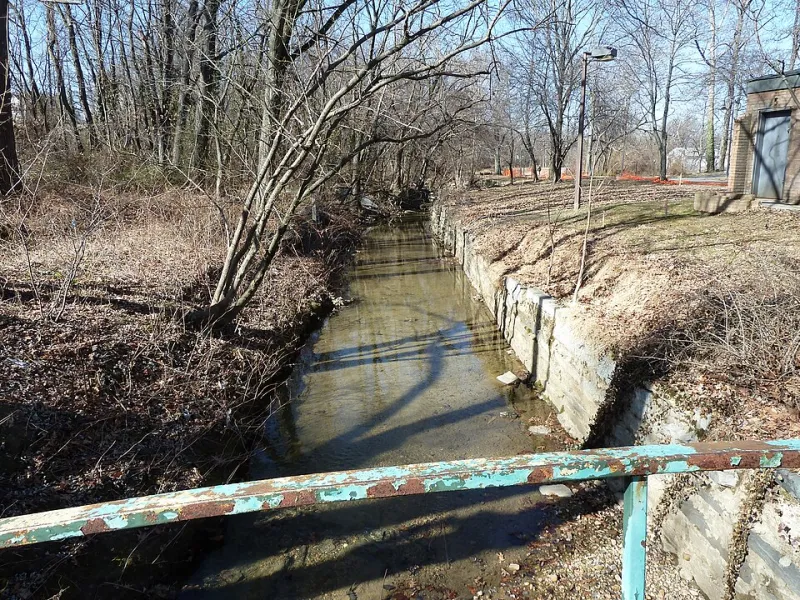
Photo: U. S. Fish and Wildlife Service - Northeast Region, Public domain, via Wikimedia Commons
In the early twentieth century, American cities treated their rivers as engineering problems to be solved. Streams were straightened, channelized in concrete, or buried entirely in underground pipes to make way for roads, rail yards, and expanding neighborhoods. The waterway was an obstacle; the city was the priority. A century later, the consequences of that logic have become impossible to ignore—and an expanding coalition of urban planners, ecologists, and community advocates is working to reverse it.
The practice known as river daylighting—the excavation and restoration of waterways that were previously buried or enclosed—has moved from an experimental idea into a mainstream urban planning strategy. From the banks of the Los Angeles River to the creek corridors of Philadelphia, cities are discovering that their buried rivers represent not a solved problem but a deferred one. And in solving it properly, they are generating benefits that extend far beyond the water itself.
The Legacy of Concrete: What Was Lost and Why It Matters
The channelization of urban rivers reached its zenith in the mid-twentieth century, driven by federal flood control programs, urban renewal initiatives, and a prevailing belief that nature could be efficiently managed through engineering. The Los Angeles River, perhaps the most iconic example, was encased in concrete by the U.S. Army Corps of Engineers between the 1930s and 1960s, transforming a dynamic riparian system into a fifty-one-mile drainage channel that serves primarily as a conduit for stormwater during heavy rain events and sits largely dry the rest of the year.
The ecological losses were immediate and profound. Riparian vegetation disappeared. Fish and wildlife habitat was eliminated. The natural processes by which rivers filter sediment, recharge groundwater, and moderate temperature were severed. But the social losses were equally significant. Communities—disproportionately low-income communities of color—that had historically lived alongside these waterways found themselves adjacent to industrial corridors and concrete infrastructure rather than green space. The river, once a commons, became a hazard zone.
Concrete channels also proved to be imperfect engineering solutions. By accelerating the velocity of stormwater runoff rather than absorbing it, they transfer flood risk downstream and increase the volume of polluted runoff entering receiving waters. The very infrastructure built to manage flooding has, in many cases, intensified it.
Los Angeles: An Improbable Transformation in Progress
No urban river restoration effort in the United States is more ambitious—or more closely watched—than the ongoing revitalization of the Los Angeles River. The $1.3 billion Taylor Yard project, the largest river restoration initiative in U.S. history, is converting an industrial brownfield site along an eleven-mile stretch of the river into a continuous greenway connecting communities in the northeastern San Fernando Valley to the river's edge for the first time in generations.
The project is not simply cosmetic. Restoration plans for eligible stretches of the river include the removal of concrete lining, the reestablishment of native riparian plant communities, and the creation of wetland complexes capable of filtering urban stormwater before it reaches the Pacific Ocean. Early completed segments, including the붕Elysian Valley reach where the concrete lining was deemed removable, have already demonstrated the river's capacity to recover: native willows and cottonwoods have reestablished, and fish species absent from the channel for decades have returned.
The social dimensions of the project are equally significant. Community organizations in historically underserved neighborhoods along the river have been central participants in planning processes, advocating for equitable access to restored green space and protections against the displacement pressures that often accompany urban greening initiatives. The tension between ecological restoration and environmental gentrification is real, and Los Angeles offers important lessons—both cautionary and encouraging—for other cities undertaking similar work.
Philadelphia's Creek Corridors: Green Infrastructure at Neighborhood Scale
On the opposite coast, Philadelphia has pursued a complementary strategy through its Green City, Clean Waters program—a landmark twenty-five-year, $2.4 billion initiative to reduce combined sewer overflows into the city's rivers and streams through green infrastructure rather than conventional gray infrastructure expansion.
At the heart of the program is the restoration and daylighting of creek corridors that were buried or degraded during the city's industrial expansion. Cobbs Creek, Tacony Creek, and portions of the Wissahickon watershed have all been subjects of restoration investment, with degraded reaches receiving streambank stabilization, native vegetation plantings, and, in select locations, the removal of culverts and underground pipes to return streams to daylit channels.
The program's results have been measurable. Green infrastructure installations across the city—including street trees, rain gardens, porous pavement, and restored creek corridors—are projected to manage hundreds of millions of gallons of stormwater annually that would otherwise overflow into the Schuylkill and Delaware Rivers carrying raw sewage. Independent analyses have documented improvements in water quality downstream of restored reaches, with reductions in bacterial contamination and sediment loading.
Perhaps most importantly, the program has demonstrated that green infrastructure can deliver these benefits at lower long-term cost than equivalent gray infrastructure alternatives, while simultaneously generating co-benefits—urban heat island reduction, improved air quality, recreational access—that concrete pipes cannot provide.
The Ecological Arithmetic of Urban Restoration
The case for urban river restoration rests on a convergence of ecological functions that restored waterways perform simultaneously. Riparian vegetation along daylighted streams intercepts and filters stormwater runoff, removing nutrients, sediment, and pathogens before they reach the main channel. Root systems stabilize banks and reduce erosion. Shade from streamside trees moderates water temperature, making restored urban reaches hospitable to cold-water fish species that cannot survive in heated concrete channels.
Restored urban streams also contribute to groundwater recharge—a function of growing importance as cities face increasing drought stress and seek to reduce dependence on imported water supplies. The Los Angeles region, which imports approximately 85 percent of its water from distant sources, has recognized river restoration as a component of its long-term water supply strategy, with restored river reaches contributing to local groundwater basin recharge in ways that concrete channels cannot.
Biodiversity returns with remarkable speed when conditions are improved. Studies of daylighted urban streams in cities including Yonkers, New York, and Kalamazoo, Michigan, have documented the rapid recolonization of restored reaches by macroinvertebrates, amphibians, and migratory birds within two to five years of restoration—timelines that challenge the assumption that urban ecological recovery must be a generational project.
Building the Case for Investment
For urban river restoration to scale from promising case studies to a national movement, the economic argument must be made clearly and repeatedly. The evidence increasingly supports it. A comprehensive analysis by the Trust for Public Land found that green infrastructure investments in urban watersheds generate returns through reduced stormwater management costs, increased adjacent property values, reduced public health expenditures, and avoided flood damage that routinely exceed the original capital investment over a twenty-year horizon.
Federal programs including the EPA's Water Infrastructure Finance and Innovation Act, FEMA's Hazard Mitigation Grant Program, and the infrastructure investments authorized under the Bipartisan Infrastructure Law have created funding pathways for urban river restoration that did not exist a decade ago. Cities that have developed the technical capacity and community partnerships to advance shovel-ready projects are well-positioned to access these resources.
What remains is a shift in how cities understand their relationship to the waterways beneath and alongside them. The rivers were not problems to be solved. They were systems to be lived with—systems that, when respected, provide services no engineered alternative can fully replicate.
The concrete is coming up. The water is finding its way back to the light. And in city after city, the communities that live alongside these recovering rivers are discovering something their great-grandparents knew: a healthy river does not diminish a city. It defines it.