Ghosts in the Groundwater: How America's Industrial Past Is Still Contaminating the Rivers We Depend On
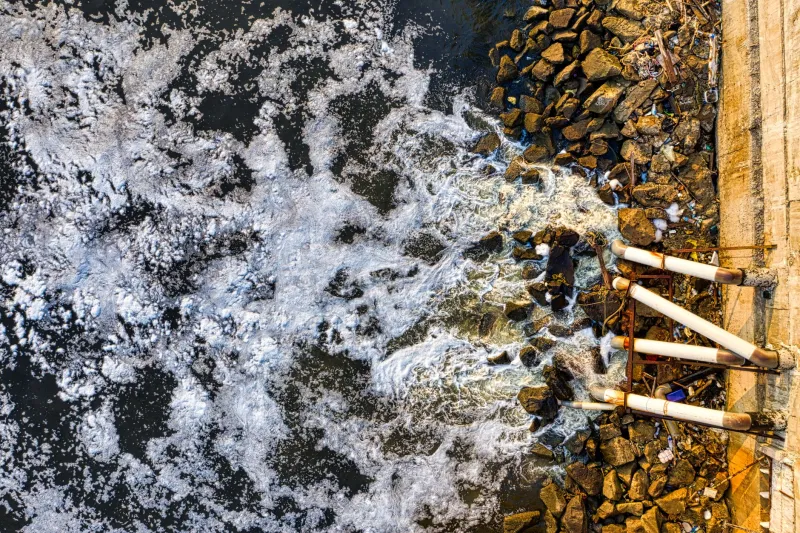
In Woburn, Massachusetts, the Aberjona River has carried the fingerprints of industrial contamination for more than a century. Tanneries, chemical plants, and manufacturing operations that flourished in the late nineteenth and early twentieth centuries left behind a subsurface archive of toxic compounds—arsenic, trichloroethylene, chromium—that groundwater has been slowly redistributing ever since. Woburn's story is not an anomaly. It is a template repeated across hundreds of American communities, from the rust belt valleys of western Pennsylvania to the mill towns of the Carolinas, where the economic engines of a previous era burned bright and left their chemical residue buried in the earth beneath our feet.
The United States Environmental Protection Agency currently lists more than 1,300 active Superfund sites on its National Priorities List, a significant proportion of which involve groundwater contamination with documented pathways to nearby surface water bodies. But the Superfund inventory captures only a fraction of the full picture. Thousands of additional sites—former dry cleaners, auto salvage yards, electroplating facilities, and textile operations—exist in a regulatory gray zone, their contamination acknowledged but not yet formally addressed.
The Invisible Pipeline Between Aquifers and Rivers
To understand why these industrial legacies continue to threaten river health, it is necessary to understand the relationship between groundwater and surface water—a relationship that hydrologists describe as deeply, dynamically interconnected.
Rivers do not exist in isolation. In most settings, a river both receives water from the surrounding aquifer and loses water back into it, depending on local geology, seasonal conditions, and the relative pressure gradients between the two systems. When an aquifer is contaminated, that contamination does not simply stay put. It travels with groundwater flow, eventually discharging into streams, wetlands, and rivers through a process called baseflow contribution. In many parts of the country, groundwater accounts for more than fifty percent of the total flow in rivers during dry months—meaning that the health of a river is inseparable from the health of the aquifer that sustains it.
This exchange zone, where groundwater and surface water commingle in the sediments beneath and alongside river channels, is known as the hyporheic zone. It is a biologically rich environment, home to specialized invertebrates and microbial communities that play critical roles in nutrient cycling and water filtration. When contaminated groundwater infiltrates this zone, it does not merely degrade water chemistry—it disrupts the ecological processes that keep rivers functional.
Case Studies in Slow Catastrophe
The Housatonic River in western Massachusetts and Connecticut offers a sobering illustration of how industrial contamination can persist across generations. General Electric's manufacturing operations in Pittsfield, Massachusetts, discharged polychlorinated biphenyls—PCBs—into the river for decades. Although direct discharges ceased long ago, PCBs bound to river sediments continue to migrate downstream, and contaminated groundwater plumes from former facility areas maintain a persistent load on the river system. Cleanup negotiations between GE, the EPA, and state regulators have stretched across decades, with communities downstream living under fish consumption advisories that show no sign of being lifted soon.
In the industrial heartland of the Midwest, the situation is similarly entrenched. Along the Calumet River corridor in northwestern Indiana and the south side of Chicago, a dense legacy of steel production, petroleum refining, and chemical manufacturing has left groundwater beneath former industrial parcels saturated with benzene, naphthalene, and heavy metals. As those parcels sit idle or transition to new uses, the contamination beneath them continues its migration toward Lake Michigan's tributaries. State environmental agencies have documented dozens of groundwater plumes in the region, yet remediation progress has been chronically underfunded and technically difficult.
Further south, the Dan River in North Carolina—already scarred by the 2014 coal ash spill that coated thirty miles of riverbed in toxic sludge—faces a secondary contamination threat from legacy industrial sites along its banks. Groundwater monitoring at former textile and manufacturing sites in the basin has detected elevated concentrations of chromium and other metals that are slowly working their way toward the river through the shallow alluvial aquifer.
Why Remediation Lags So Far Behind
The persistence of legacy industrial contamination is not simply a technical problem. It is a structural one, shaped by the intersection of inadequate regulation, corporate liability evasion, and the sheer scale of the challenge.
Many of the companies responsible for historical contamination have reorganized, dissolved, or transferred liability in ways that make legal accountability nearly impossible to establish. When responsible parties cannot be identified or compelled to act, cleanup costs fall to state and federal environmental agencies operating under perpetually constrained budgets. The EPA's Superfund program, which was designed to address exactly this problem, has faced chronic funding shortfalls for decades. Its Hazardous Substance Superfund account relies partly on fees from the chemical and petroleum industries—fees that lapsed between 1995 and 2022, starving the program of revenue precisely when the backlog of contaminated sites was growing.
Technical limitations compound these institutional failures. Many of the most persistent contaminants—chlorinated solvents, certain pesticides, and PFAS compounds—are extraordinarily difficult to remove from aquifers. Dense non-aqueous phase liquids, or DNAPLs, sink through the water table and pool in subsurface formations where they can serve as long-term contamination sources for decades. Current pump-and-treat technologies can manage these plumes but rarely eliminate them.
Toward a More Honest Accounting
Addressing the groundwater contamination legacy that threatens America's rivers will require a willingness to confront uncomfortable truths about how this nation industrialized and how it has chosen—or failed—to reckon with the consequences.
First, it demands investment. The bipartisan infrastructure law passed in 2021 included significant new resources for Superfund cleanup and water infrastructure, and the restoration of Superfund fees on chemical manufacturers represents a meaningful step toward polluter accountability. But these resources remain insufficient relative to the scale of contamination documented across the country.
Second, it requires better science. The monitoring networks that would allow regulators and communities to track groundwater-surface water contamination pathways in real time are woefully incomplete. Strengthening baseline monitoring, particularly in watersheds with documented industrial histories, would allow for earlier intervention and more targeted remediation.
Third, and perhaps most critically, it demands community engagement. The communities living downstream from legacy contamination sites—disproportionately communities of color and low-income communities, as environmental justice research consistently demonstrates—must have meaningful roles in cleanup planning and decision-making. Their knowledge of local conditions, their health data, and their lived experience are irreplaceable inputs into any serious remediation effort.
The rivers that flow through our communities carry more than water. They carry the accumulated decisions of generations—decisions about what to build, what to discharge, and what to leave behind. Confronting the chemical legacies buried beneath our feet is not simply an environmental obligation. It is a precondition for the river health that sustaining life in this country ultimately depends upon.