Degrees of Danger: The Slow Warming of America's Rivers and What Communities Stand to Lose
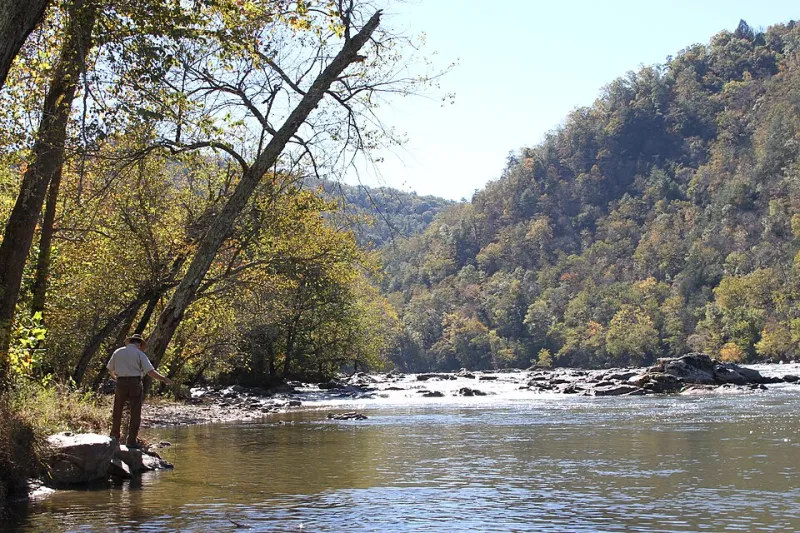
Photo: U.S. Fish and Wildlife Service Southeast Region, Public domain, via Wikimedia Commons
On a map, the Upper Yellowstone River looks much the same as it did a century ago. The channel still winds through the same broad valley. The cottonwoods still line the banks. But in late July, when water temperatures in some reaches now regularly exceed 75 degrees Fahrenheit, the river is a fundamentally different place — one that is becoming increasingly hostile to the native Yellowstone cutthroat trout that have defined the ecosystem for thousands of years.
What is happening in the Yellowstone is happening, in varying degrees, in rivers across the United States. Water temperature, long treated as a secondary concern in conservation planning, has emerged as one of the most consequential frontiers of climate impact. And unlike carbon emissions or sea level rise, it is a crisis unfolding in the rivers that communities drink from, fish in, and depend upon — often without fully recognizing what is being lost.
The Physics of a Warming River
River temperature is governed by a complex interplay of factors: air temperature, solar radiation, groundwater inputs, flow volume, riparian shade, and the thermal properties of the surrounding landscape. Under stable climatic conditions, these variables produce the seasonal temperature regimes that aquatic species have evolved to depend upon — cold snowmelt pulses in spring, gradually warming summers moderated by shaded pools and cool groundwater seeps, and the thermal recovery of autumn.
Climate change is systematically disrupting each of these variables simultaneously. Mean air temperatures across the contiguous United States have risen approximately 1.8 degrees Fahrenheit since pre-industrial times, with the rate of warming accelerating in recent decades. Earlier snowmelt reduces the cold-water pulse that many rivers rely on to stay cool through summer. Reduced summer streamflow — a consequence of both lower precipitation and increased evapotranspiration — concentrates heat in shallower water columns. Intensified drought conditions in the West have amplified these dynamics to a degree that researchers describe as unprecedented in the instrumental record.
The result is a measurable, sustained upward trend in river temperatures across much of the country. A 2020 analysis published in the journal Nature Climate Change found that stream temperatures in the contiguous US have warmed at an average rate of 0.34 degrees Fahrenheit per decade since 1980, with some Western rivers warming at more than twice that rate. These numbers may sound modest in isolation. In the context of aquatic biology, they are anything but.
A Cascade of Ecological Consequences
Aquatic species are thermal specialists. Each organism — from the mayfly larvae that form the base of the food web to the brown trout that anglers travel thousands of miles to pursue — has a specific temperature range within which it can feed, reproduce, and survive. When river temperatures exceed those thresholds, the consequences cascade through the entire ecosystem.
Cold-water fish species are the most visible casualties. Brook trout, bull trout, and various Pacific salmon species are already experiencing range contractions driven by thermal stress. In the Appalachian highlands, brook trout populations have retreated to ever-smaller headwater refuges as mainstem temperatures climb. In the Columbia River Basin, summer water temperatures regularly exceed the thermal tolerance of sockeye salmon during their upstream migration — a phenomenon that has contributed to catastrophic in-river mortality events, including a 2015 die-off in which an estimated 250,000 sockeye perished before reaching their spawning grounds.
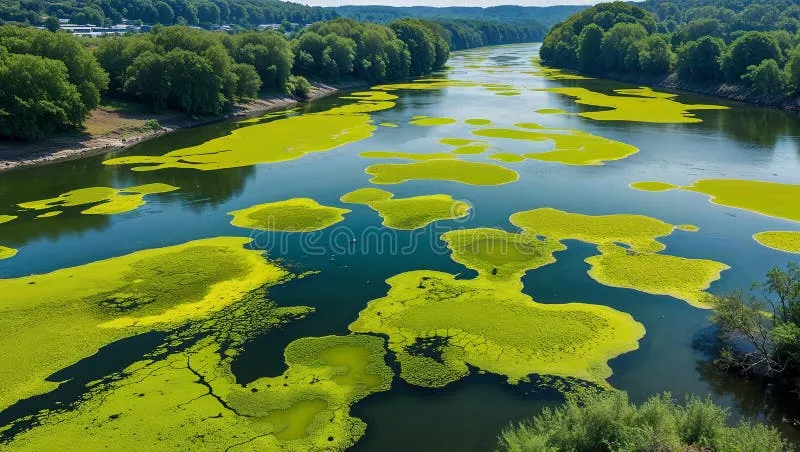
Beyond fish, warming water accelerates the growth of harmful algal blooms — proliferations of cyanobacteria that produce toxins dangerous to humans, pets, and livestock. Warmer water holds less dissolved oxygen, compounding the stress on aquatic organisms already struggling with thermal conditions. It also alters the timing of insect emergence, disrupting the food web synchronies that sustain fish populations through critical life stages. Rivers that once functioned as highly productive ecological systems are, in some cases, transitioning into warm, low-oxygen environments capable of supporting only a fraction of their historical biological diversity.
The Drinking Water Dimension
The public health implications of river warming extend well beyond ecosystem integrity. Approximately 68 million Americans receive their drinking water from surface sources, including rivers and reservoirs that are themselves subject to the thermal dynamics described above.
Warmer source water presents significant challenges for municipal water treatment. Elevated temperatures promote the growth of taste- and odor-producing algae, increase the formation of disinfection byproducts when organic matter reacts with chlorine, and can compromise the efficacy of filtration systems designed for cooler water conditions. Utilities in the Southeast and Midwest — regions already managing elevated nutrient loads from agricultural runoff — are reporting increasing treatment costs and operational complexity as source water temperatures rise.
The relationship between warming rivers and waterborne pathogens is also drawing increased scientific scrutiny. Several studies have linked elevated water temperatures to expanded habitat for bacteria such as Vibrio and Naegleria fowleri, the brain-eating amoeba that, while rare, has caused fatal infections in recreational water users across the Southern United States. As thermal conditions shift northward, public health officials are monitoring for the potential spread of these organisms into water bodies where they have not historically been present.
Protecting What Remains: The Science of Thermal Refugia
Not all hope is lost. Within warming river systems, cold-water refugia — localized areas where groundwater inputs, deep pools, or tributary confluences maintain temperatures below the thermal stress threshold — can serve as critical survival zones for heat-sensitive species. Identifying, protecting, and actively restoring these refugia has become a priority focus for river conservation practitioners.
The science of refugia management is advancing rapidly. Thermal infrared aerial surveys can now map groundwater upwelling zones across entire river reaches, allowing restoration planners to prioritize the most thermally valuable sites. Research in the Pacific Northwest has demonstrated that strategic riparian reforestation — planting native trees and shrubs along streambanks — can reduce summer water temperatures by as much as 5 to 8 degrees Fahrenheit in smaller streams, a difference that can mean survival or extinction for cold-water species in thermally marginal habitats.
Floodplain restoration also plays a critical role. Rivers connected to their floodplains exchange water with shallow alluvial aquifers, drawing in cooler groundwater during summer low-flow periods. This hyporheic exchange — the movement of water between the river channel and adjacent sediments — is disrupted by channelization and bank hardening, contributing to the thermal vulnerability of rivers that have been physically disconnected from their natural floodplain systems.
A Community Imperative
Meeting the challenge of river warming will require action at every scale — from federal climate policy to municipal land use decisions to individual watershed stewardship choices. Communities that depend on rivers for drinking water, recreation, and ecological identity have both the most to lose and the most direct capacity to act.
Shading streams through riparian buffer restoration is among the most cost-effective interventions available at the local level. Municipalities can reduce impervious surface coverage in urban watersheds to limit the thermal loading that stormwater carries into receiving streams. Water utilities can invest in source water monitoring programs that provide early warning of thermal and algal threats. And state and federal agencies can prioritize the acquisition and protection of critical groundwater recharge areas that sustain the cold-water inputs rivers increasingly depend upon.
The warming of America's rivers is not a future threat. It is a present reality, measurable in the temperature records of monitoring stations from Maine to Montana, visible in the contracting ranges of cold-water fish, and increasingly felt in the rising treatment costs of water utilities managing hotter, more biologically complex source water. The question is not whether communities will respond — it is whether they will do so before the thermal window for effective action closes entirely.