Breaking the Concrete: How Strategic Dam Removal Is Rewriting the Future of American Rivers
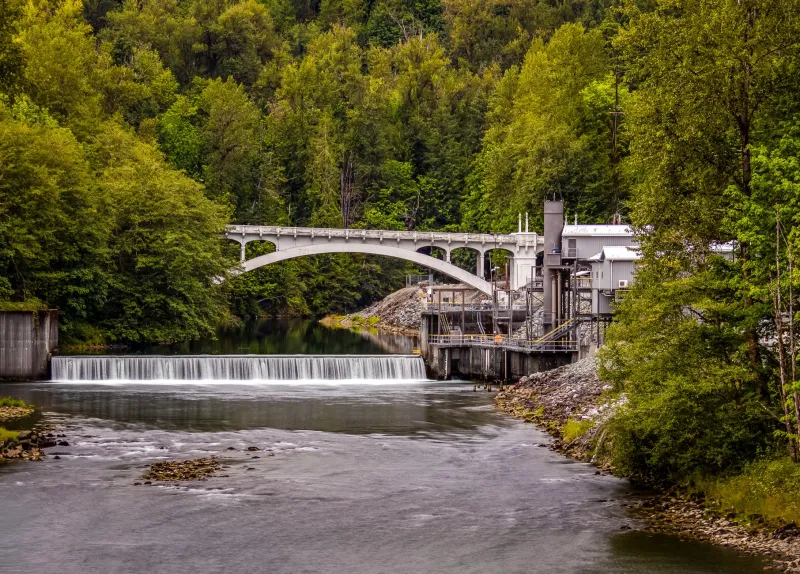
For much of the twentieth century, dams were synonymous with progress. They powered cities, irrigated farmland, and became monuments to American engineering ambition. Today, however, a growing body of scientific evidence is reframing that legacy. Thousands of dams across the country have outlived their functional purpose, yet they continue to fragment river ecosystems, trap sediment, block migratory fish, and—critically—release greenhouse gases in ways that most people never anticipated. Strategic dam removal is no longer a fringe conservation idea. It is rapidly becoming one of the most ecologically sound and climatically significant infrastructure decisions a community can make.
The Scale of the Problem
The United States is home to more than 91,000 dams catalogued by the Army Corps of Engineers, and the vast majority were built before modern environmental regulations existed. According to the American Society of Civil Engineers, the average age of a dam in this country exceeds 57 years. Many were constructed with a 50-year design life, meaning a significant portion are operating beyond their intended lifespan—crumbling infrastructure that poses both safety risks and ongoing ecological damage.
When a dam blocks a river, the consequences cascade throughout the entire watershed. Sediment that would naturally nourish downstream floodplains and coastal deltas piles up behind the structure. Water temperatures rise in the reservoir, reducing oxygen levels and creating conditions inhospitable to cold-water species. Migratory fish—salmon, steelhead, shad, and American eel among them—are cut off from spawning grounds their populations have depended upon for millennia. The river, in essence, is severed from itself.
The Climate Dimension Nobody Talks About
What is less widely understood is the role that reservoirs play in climate change. Decomposing organic matter trapped beneath reservoir surfaces generates methane—a greenhouse gas roughly 80 times more potent than carbon dioxide over a 20-year period. A landmark study published in BioScience estimated that reservoirs worldwide emit approximately 1.3 percent of all human-caused greenhouse gas emissions annually. For aging, shallow reservoirs in warmer climates, those emissions can be disproportionately high relative to the energy or water storage they still provide.
Conversely, restored free-flowing rivers sequester carbon more effectively. Reconnected floodplains accumulate organic carbon in soils. Revived riparian vegetation—the dense corridors of trees and shrubs that line healthy riverbanks—absorbs atmospheric carbon while simultaneously shading waterways, reducing temperatures during heat events that are becoming more frequent and more severe under climate change. In this way, dam removal functions as both a mitigation and an adaptation strategy, a rare convergence that climate planners should be actively prioritizing.
The Elwha River: A Landmark Lesson
No case study illustrates the transformative potential of dam removal more vividly than the Elwha River on Washington's Olympic Peninsula. The Elwha Dam, built in 1913, and the Glines Canyon Dam, completed in 1927, had blocked the river for nearly a century, decimating salmon runs that the Lower Elwha Klallam Tribe had depended upon for thousands of years. When removal began in 2011—the largest dam removal project in American history at that time—scientists were cautiously optimistic but uncertain about the pace of recovery.
What followed exceeded nearly every projection. Within months of the dams coming down, the river began moving sediment toward the coast, rebuilding its estuary. Within two years, Chinook salmon were documented spawning in sections of the river that had been inaccessible for a century. Native plants colonized the former reservoir beds with minimal human intervention. Today, the Elwha stands as one of the most closely studied river restoration efforts on earth, and its lesson is straightforward: when you remove the obstacle, rivers know how to heal.
Beyond the Elwha: A Growing National Movement
The Elwha is the most celebrated example, but it is far from isolated. On the Penobscot River in Maine, the removal of the Veazie and Great Works dams in 2012 and 2013 opened more than 1,000 miles of river habitat to migratory fish. River herring returns increased by orders of magnitude within just a few years. In California, the removal of four dams on the Klamath River—completed in phases between 2023 and 2024—represents the largest dam removal project in world history, restoring habitat critical to Coho and Chinook salmon populations that had been in steep decline for decades.
Smaller projects are equally instructive. Across New England, the Northeast, and the Mid-Atlantic states, hundreds of low-head dams—small structures that generate little to no energy but block fish passage entirely—have been removed by local conservation groups, municipalities, and state agencies. Each removal, however modest in scale, reconnects a fragment of the river network, and those fragments add up.
The Barriers That Remain
Despite this momentum, dam removal faces formidable obstacles. Legal complexity is significant: water rights, hydropower licenses, liability concerns, and competing stakeholder interests can stall projects for years or even decades. Agricultural interests often resist removal out of concern for irrigation water access, even when alternative water sources are available. Some communities retain deep cultural attachments to reservoirs used for recreation, and those attachments deserve to be acknowledged in any honest public conversation.
Funding remains a persistent challenge, though the landscape is improving. The Bipartisan Infrastructure Law signed in 2021 allocated substantial resources toward dam safety and removal, and the National Oceanic and Atmospheric Administration has expanded its dam removal grant programs in recent years. Still, the pace of removal lags far behind the scale of the need.
A Call for Systemic Rethinking
What the science demands—and what Clean River Alliance advocates for—is a systematic national reassessment of dam infrastructure. Not every dam should be removed; some serve essential functions in water supply, flood control, or power generation. But thousands do not. They sit in rivers, doing ecological damage around the clock, maintained at public expense, serving purposes that expired a generation ago.
The question is no longer whether dam removal works. The Elwha, the Penobscot, and dozens of other restored rivers have answered that definitively. The question is whether we have the institutional will to act at the scale the moment requires. In a era defined by climate urgency and ecological loss, allowing rivers to run free is not nostalgia. It is strategy.