The Thirsty Migration: What America's Climate-Driven Population Shifts Mean for the Future of Its Rivers
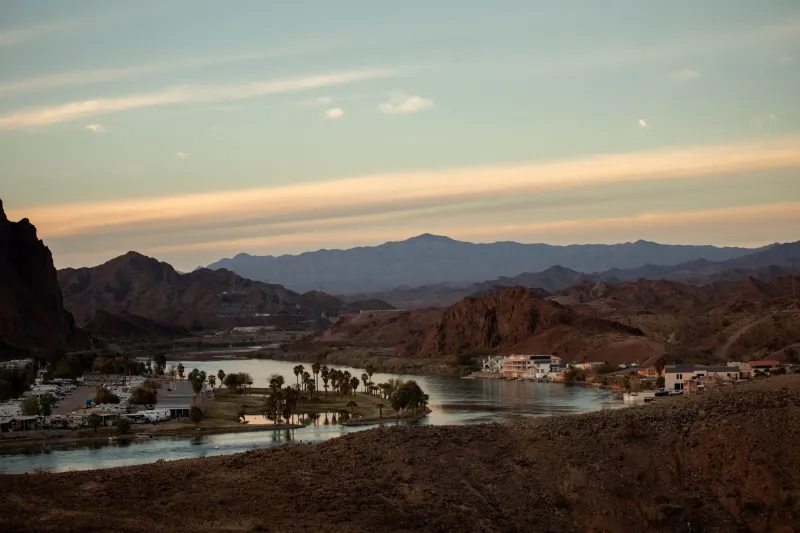
Somewhere between Phoenix and Boise, between the parched Colorado River Basin and the comparatively water-rich Pacific Northwest, a demographic story is unfolding that will define the conservation challenges of the coming generation. Americans are moving—not in the modest, incremental patterns of ordinary economic migration, but in accelerating waves shaped by the compounding pressures of extreme heat, prolonged drought, catastrophic flooding, and the rising costs of climate-related insurance. And wherever they move, they bring their water needs with them.
The rivers of the American West, already stretched to their ecological limits by over-allocation, agricultural demand, and warming temperatures, now face the additional burden of swelling urban populations. Meanwhile, the rivers of the Mountain West, the Upper South, and parts of the Great Lakes region—long-accustomed to relative hydrological abundance—are beginning to experience the early tremors of demand they were never expected to absorb. The conservation implications are profound, and the management frameworks governing these systems are struggling to keep pace.
The Geography of Climate Flight
Understanding the scale of what is happening requires looking at the data honestly. The Census Bureau's most recent intercensal estimates confirm what demographers and climate researchers have been projecting for years: the Sun Belt states most vulnerable to extreme heat and water scarcity—Arizona, Nevada, and parts of California—are experiencing net domestic outmigration for the first time in decades, even as international immigration partially offsets those losses. Meanwhile, states in the Mountain West, particularly Montana, Idaho, and Colorado, have seen dramatic population increases driven partly by climate amenity migration—people seeking cooler temperatures, lower wildfire risk, and perceived water security.
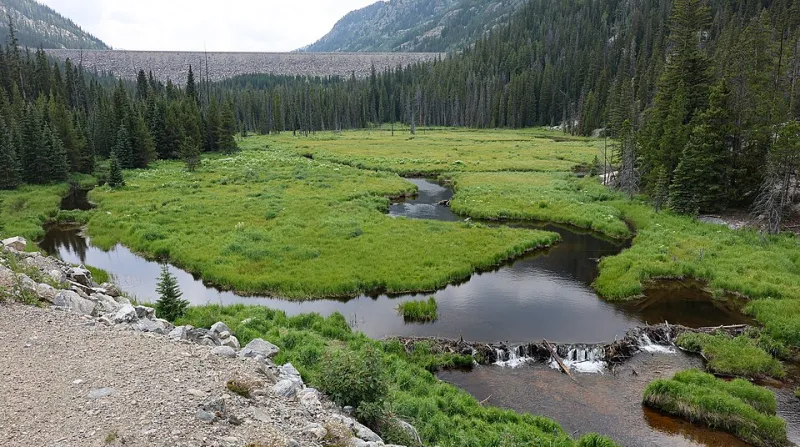
The Boise metropolitan area, anchored by the Boise River, grew by more than thirty percent over the last decade. The Snake River Plain aquifer system, which sustains both agricultural production and urban water supply across a vast swath of southern Idaho, is already under measurable stress. Conservation groups monitoring the lower Boise River have documented declining late-summer flows and elevated nutrient concentrations as the river absorbs the wastewater and stormwater outputs of a rapidly expanding urban footprint.
In western Montana, the Clark Fork River watershed—celebrated for its blue-ribbon trout fisheries and its gradual recovery from nearly a century of copper mining contamination—now faces the irony of being threatened by the very people drawn to its ecological beauty. Population growth in Missoula County has accelerated dramatically, placing new pressures on groundwater withdrawals, floodplain development, and tributary stream flows during the critical low-water months when aquatic ecosystems are most vulnerable.
Conservation Paradoxes in the Receiving Basins
The paradoxes embedded in this situation are not easily resolved. People relocating to river-rich regions frequently cite environmental quality as a primary motivation—they are, in many cases, fleeing the degraded landscapes and compromised water supplies of their origin communities. Yet their arrival in ecologically sensitive watersheds can, if poorly managed, replicate the very dynamics they sought to escape.
This creates a genuine tension for conservation organizations. The impulse to welcome climate migrants and to acknowledge the legitimate human suffering driving these movements is real. So is the obligation to protect the river systems that make these receiving communities livable in the first place. Striking that balance requires conservation planning that is simultaneously more inclusive and more rigorous than anything the field has previously attempted.
Water managers in Oregon's Willamette Valley are confronting exactly this tension. The Willamette River, which flows north through the state's most densely populated corridor, supports a complex web of ecological and economic values—salmon habitat, agricultural irrigation, municipal water supply, and recreational use among them. The valley's population has grown substantially as Californians and others seek relief from southern heat and water insecurity. Demand projections from the Oregon Water Resources Department now show urban water use on a trajectory that will require difficult choices about agricultural water rights, minimum flow protections, and infrastructure investment within the next fifteen years.
Rethinking the Frameworks
The legal and administrative structures governing water allocation in the United States were largely designed for a static demographic reality—one in which population distribution was relatively predictable and water demand grew incrementally within established basins. Climate migration disrupts those assumptions fundamentally.
The prior appropriation doctrine that governs water rights across most of the American West—the principle that earlier claimants have superior rights to water regardless of current need—is particularly ill-suited to the demands of rapid demographic change. It was built to protect agricultural users who had invested in infrastructure on the basis of reliable water access, not to navigate a landscape in which entire metropolitan areas are effectively relocating from one watershed to another.
Some water management agencies are beginning to experiment with more adaptive approaches. The Colorado River Basin, long the site of the nation's most fraught water allocation battles, has seen the emergence of demand management programs that pay agricultural users to temporarily fallow fields and return water to the system during shortage conditions. These programs represent a departure from the rigid hierarchy of prior appropriation and signal a growing recognition that flexibility—not rigidity—is the cardinal virtue in an era of hydrological uncertainty.
For river conservation specifically, the challenge is to embed ecological flow requirements into planning processes before demand grows to the point where protecting minimum flows becomes politically untenable. Several Western states have made progress on instream flow protections in recent years, but the pace of that progress has not matched the pace of population change in the most stressed watersheds.
What Communities and Conservationists Must Do Together
The most durable responses to this challenge will not emerge from technical planning alone. They will require the active engagement of the communities—both long-established and newly arrived—whose futures are bound up in the health of these river systems.
In practice, this means conservation organizations must expand their traditional advocacy work to include affordable housing, land use planning, and climate justice dimensions that may feel distant from the riverbank but are in fact inseparable from it. A river cannot be protected in isolation from the social dynamics of the watershed it flows through. Where population growth is driven partly by climate displacement, the people arriving are frequently carrying the trauma of losing their own ecological homes. That experience, channeled constructively, can become a powerful source of conservation energy rather than a threat to it.
The rivers that will survive the coming decades of demographic transformation will be those embedded in communities that understand their value deeply enough to defend them—not as amenities to be enjoyed, but as living systems whose health is the foundation of everything else. Building that understanding, across the full diversity of communities now settling in America's river valleys, is among the most urgent conservation tasks of our time.