Underfunded and Unfinished: The Quiet Crisis Draining America's River Restoration Ambitions
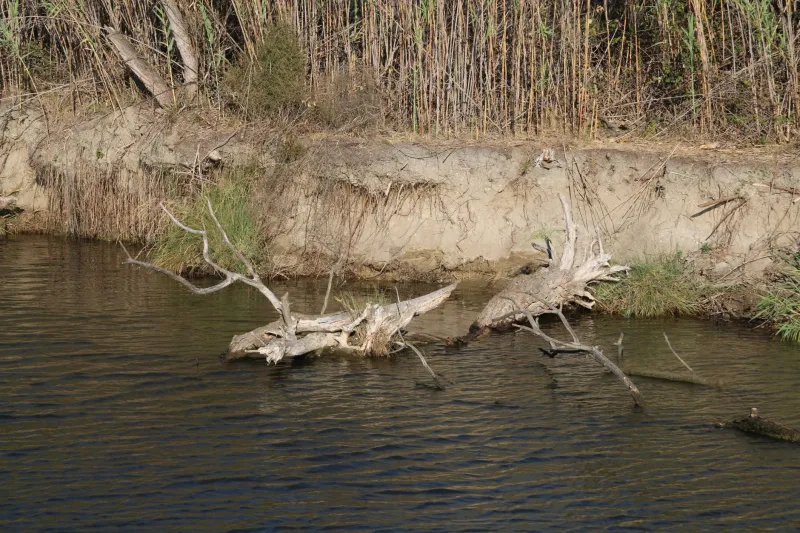
In 2019, a coalition of conservation groups, tribal representatives, and local government agencies in northern California celebrated what they described as a watershed moment—literally. After years of planning, permitting, and fundraising, work was set to begin on a multi-phase restoration effort along a degraded tributary of the Klamath River, targeting the removal of accumulated sediment, the replanting of riparian vegetation, and the reconstruction of fish passage features that coho salmon had not used in decades. By 2021, the first phase was complete. The second phase, already designed and permitted, has not begun. The grant funding that was supposed to bridge the two phases fell through when a federal competitive grant program was oversubscribed by a ratio of nearly eight to one. The coalition is still searching for the roughly $1.4 million needed to continue.
This story is not exceptional. It is representative of a systemic failure that quietly undermines river conservation efforts from Appalachia to the Pacific Coast—a failure not of will, not of science, and not of community commitment, but of sustained, reliable funding.
A Landscape of Perpetual Scarcity
The funding ecosystem for river restoration in the United States is, to use the technical term, a mess. It is composed of overlapping, often competing streams of federal, state, philanthropic, and private investment, each with its own eligibility criteria, matching requirements, reporting burdens, and political vulnerabilities. Federal programs administered through the EPA, the Army Corps of Engineers, the Natural Resources Conservation Service, the National Oceanic and Atmospheric Administration, and the Fish and Wildlife Service all fund restoration work—but they do so through separate appropriations processes, with different timelines, and with little coordination.
The result is that project managers spend enormous quantities of time and organizational capacity chasing grants rather than doing restoration. A 2022 survey of river restoration practitioners conducted by American Rivers found that project coordinators spent, on average, more than thirty percent of their working hours on grant writing, reporting, and compliance activities. That is time not spent monitoring stream channels, engaging with landowners, or implementing the habitat improvements the funding was ostensibly secured to achieve.
Philanthropic funding, while meaningful and often catalytic, cannot substitute for public investment at the scale the challenge demands. The largest conservation foundations in the country collectively disburse hundreds of millions of dollars annually toward water and river work—a significant sum that nonetheless represents a fraction of what credible needs assessments suggest is required. A 2020 analysis from the National Fish Habitat Partnership estimated that achieving meaningful improvements in aquatic habitat connectivity across priority watersheds would require sustained investment of several billion dollars per year over a multi-decade horizon. Current combined public and private expenditure falls dramatically short of that threshold.
The Trade-Off Trap
When funding is scarce and the needs are vast, the inevitable result is triage—and triage produces its own injustices. Conservation managers forced to choose between projects must apply criteria that may have little to do with ecological urgency or community need, and much to do with which watersheds have the grant-writing capacity, the political connections, and the existing infrastructure to compete successfully for limited dollars.
This dynamic consistently disadvantages rural, low-income, and tribal communities, whose rivers are often among the most degraded and whose restoration potential is frequently the highest. The Penobscot River in Maine, which has seen remarkable salmon recovery following major dam removals supported by a well-resourced and politically connected coalition, stands in contrast to dozens of smaller river systems across the country whose restoration potential is equally significant but whose advocates lack comparable capacity or visibility.
The trade-off problem extends to ecosystems as well. When a state agency or federal program must allocate a fixed restoration budget across multiple impaired watersheds, it must make choices that implicitly assign relative values to different ecological communities—choices that are rarely transparent and almost never subjected to genuine public deliberation. Headwater streams critical to amphibian diversity may lose out to mainstem river reaches that offer more visible recreational benefits. Wetland complexes that provide irreplaceable flood attenuation and water quality services may be deferred in favor of projects with stronger salmon recovery narratives, because salmon generate more political will and more donor enthusiasm.
These are not hypothetical dilemmas. They play out in grant review panels, agency budget meetings, and legislative appropriations processes every year, and their cumulative effect is to leave significant ecological value permanently unrealized.
What Actually Works—And Why It's Still Not Enough
To be clear: some funding mechanisms have demonstrated genuine effectiveness, and the field has learned a great deal about what distinguishes successful restoration investments from wasteful ones. The EPA's Section 319 nonpoint source pollution program, despite its chronic underfunding, has supported thousands of watershed restoration projects and generated a substantial body of evidence about cost-effective approaches to water quality improvement. NOAA's Community-Based Restoration Program has similarly demonstrated that targeted investments in fish habitat, when paired with robust monitoring and adaptive management, can yield measurable ecological returns.
The 2021 Infrastructure Investment and Jobs Act represented the largest single infusion of federal funding into water infrastructure in a generation, including meaningful new resources for watershed restoration, fish passage, and drinking water system improvements. Its passage was a genuine achievement, and the projects it is funding represent real progress. But the law is a one-time appropriation, not a permanent funding stream. When its resources are exhausted, the structural underfunding that preceded it will reassert itself unless Congress acts to establish durable, dedicated funding mechanisms.
Several models for more sustainable investment deserve serious consideration. A national water restoration trust fund, modeled on the Land and Water Conservation Fund but dedicated specifically to river and watershed restoration, could provide a predictable, multi-year funding baseline that allows project managers to plan and execute multi-phase work without the constant interruption of the grant cycle. Expanded use of mitigation banking and conservation finance mechanisms—in which private actors invest in watershed restoration in exchange for regulatory credits—can leverage public dollars and bring private capital into the field, though these approaches carry their own risks of prioritizing bankable projects over ecologically necessary ones.
The Infrastructure Argument We Haven't Made Loudly Enough
Perhaps the most important reframing available to advocates of river restoration funding is the one that has already proven effective in adjacent policy domains: the infrastructure argument. When the United States invests in healthy rivers, it is not spending money on an environmental amenity. It is investing in the natural systems that filter drinking water, attenuate floods, recharge aquifers, support commercial fisheries, and anchor outdoor recreation economies worth tens of billions of dollars annually.
The economic case for river restoration is well-documented and, in most instances, compelling. Studies of dam removal projects consistently show that the recreational and fishery values unlocked by restored river connectivity exceed removal costs within a relatively short time horizon. Riparian buffer restoration programs that reduce nutrient loading to rivers produce drinking water treatment cost savings that can be quantified and attributed directly to the investment. These are not soft environmental benefits. They are hard economic returns on public infrastructure spending.
Making this case loudly, persistently, and in the language of economic value—without abandoning the ecological and moral dimensions of river conservation—is among the most important tasks facing the advocacy community. Rivers are infrastructure. Funding their restoration is not a luxury that can be deferred when budgets tighten. It is a foundational investment in the water security, ecological resilience, and public health of communities across this country. The gap between what we know and what we fund is not a scientific problem. It is a political one. And political problems, unlike contaminated aquifers, can be remediated quickly when the will to act finally arrives.