Hemorrhaging Water: How Crumbling Pipes Are Quietly Undoing America's River Recovery
Every year, river advocates celebrate milestones: a dam removed, a floodplain restored, a contaminated tributary returned to health. These victories are hard-won and genuinely meaningful. Yet beneath the streets of nearly every American city, a slow-motion catastrophe is quietly erasing much of that progress—one corroded joint, one fractured main, one leaking lateral at a time.
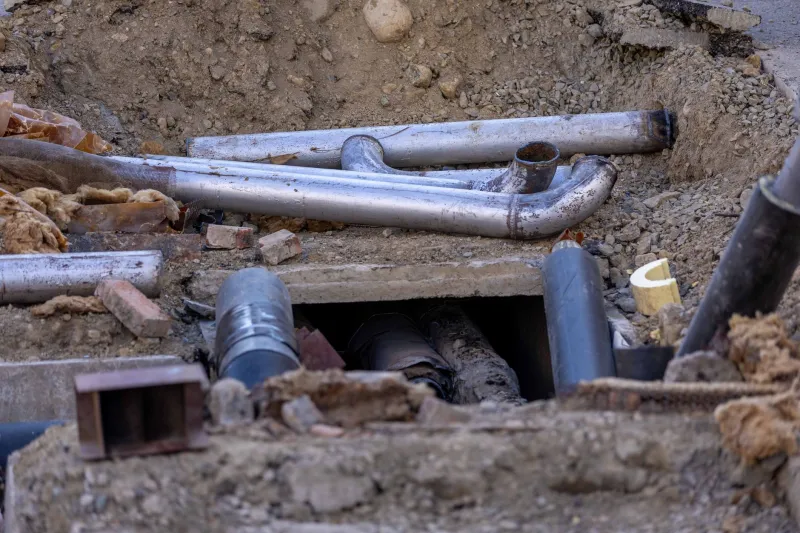
America's municipal water distribution infrastructure is, in many places, well past its functional lifespan. Cast-iron mains installed during the Eisenhower era—or earlier—carry treated drinking water through networks that were never designed to last this long. The consequences extend far beyond water bills and burst pipes. For rivers already struggling with reduced baseflows, depleted aquifers, and stressed ecosystems, the chronic loss of water from aging distribution systems represents a compounding injury that the conservation community has been too slow to recognize.
The Scale of the Loss
The numbers are difficult to fully absorb. According to the American Society of Civil Engineers, the United States loses an estimated six billion gallons of treated drinking water every single day to leaky infrastructure. In some municipalities—particularly in older industrial cities across the Midwest and Northeast—non-revenue water loss, the industry term for water that is treated and pumped but never reaches a paying customer, exceeds 30 percent of total system output. In the most deteriorated systems, that figure climbs toward 50 percent.
To put that in ecological context: water utilities draw their supply from surface sources—rivers, reservoirs, and lakes—or from groundwater aquifers that are themselves recharged by river systems. When half of that withdrawn water vanishes into the soil beneath city streets rather than returning to the hydrological cycle through legitimate reuse, the withdrawal effectively doubles in its impact on source water bodies. A river that is already over-allocated, already running low in late summer, already failing to support cold-water species, is being asked to supply not just the water residents actually use, but also the water that disappears silently underground.
In regions where groundwater and surface water are hydraulically connected—which describes the majority of the continental United States—this dynamic becomes even more consequential. Treated water leaking beneath streets does not reliably recharge the same aquifers that sustain river baseflows. It may migrate toward storm sewers, contribute to basement flooding, or simply evaporate. The net result is a one-way transfer: water drawn from a river system, treated at considerable energy cost, and then lost without meaningful return.
A Financial Trap With Ecological Consequences
The infrastructure deficit that created this crisis did not materialize overnight, nor did it arise from indifference alone. Replacing aging water mains is extraordinarily expensive. The EPA's most recent Drinking Water Infrastructure Needs Survey estimated that the United States requires more than $625 billion in water infrastructure investment over the next two decades. For smaller municipalities—many of which serve communities already contending with population loss, declining tax bases, and competing demands on limited budgets—that figure represents an essentially insurmountable barrier without federal support.
The political economy of pipe replacement further complicates matters. Fixing a water main is invisible work. There is no ribbon to cut, no restored wetland to photograph, no salmon to count at a fish ladder. Elected officials operating on two- and four-year cycles have historically found it difficult to champion capital expenditures that voters will never directly see. The result is a decades-long pattern of deferred maintenance that has transformed a manageable problem into a structural crisis.
Meanwhile, the rivers that supply these systems continue to absorb the ecological cost. In the Colorado River Basin, where water managers negotiate allocations to the decimal point, water lost to distribution leakage represents a significant and largely unaccounted variable. In the Great Lakes region, where communities draw from one of the world's most significant freshwater reserves, aging infrastructure quietly undermines the conservation ethic that regional water compacts are designed to enforce.
The Restoration Calculus
What would it mean for American rivers if the nation committed seriously to infrastructure modernization? The math, while imprecise, is instructive.
Consider a mid-sized Midwestern city drawing 30 million gallons per day from a river system and losing 35 percent of that volume to distribution leakage. Reducing losses to the EPA-recommended benchmark of 10 percent would effectively return more than seven million gallons per day to the system—water that could remain in the river, sustain downstream flows, or recharge the aquifers that buffer rivers during drought. Across hundreds of municipalities drawing from stressed watersheds, the cumulative effect would be substantial.
Several states have begun to recognize this connection explicitly. California's water loss reporting requirements, enacted as part of broader drought resilience legislation, now compel utilities to audit and publicly disclose non-revenue water figures. Virginia has piloted programs linking infrastructure grant eligibility to demonstrated reductions in system losses. These are early steps, but they reflect a growing understanding that water conservation is not solely a demand-side challenge—it is equally a question of how responsibly treated water is managed once it leaves the treatment plant.
Connecting the Pipes to the River
The river restoration community has long understood that watershed health is systemic. A floodplain cannot be restored in isolation from the upland hydrology that feeds it. A contaminated tributary cannot be healed without addressing the agricultural drainage that poisons it. The same integrative logic applies here: you cannot fully restore a river's ecological integrity while allowing the infrastructure drawing from it to hemorrhage water at industrial scale.
This is not an argument against continued investment in direct river restoration. Dam removal, riparian replanting, floodplain reconnection—these interventions remain essential and urgent. But the conservation calculus must expand to include the built infrastructure that mediates humanity's relationship with river systems. Pipes are not separate from watersheds. They are part of them.
Advocating for federal investment in water infrastructure replacement—particularly in communities serving over-allocated watersheds—is, at its core, an act of river advocacy. Every gallon that stops leaking beneath a city street is a gallon that can stay where rivers and the ecosystems they sustain need it most.
The work of river restoration has always required looking upstream for causes. It is time, equally, to look underground.