Too Hot to Survive: How Industrial Heat and Urban Sprawl Are Pushing America's Rivers Past the Breaking Point
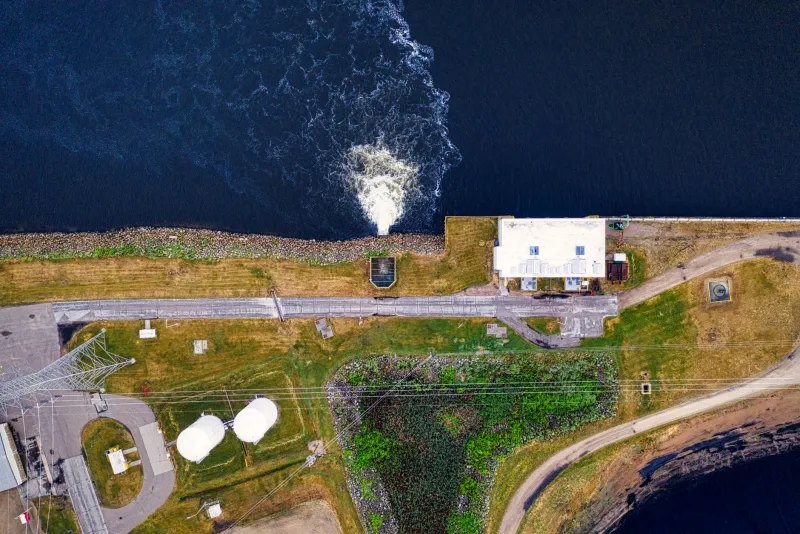
On a mid-July afternoon, the surface of the Connecticut River near Haddam, Connecticut, can read nearly 84 degrees Fahrenheit — a temperature that a brook trout would not survive for long. This is not a natural phenomenon. It is the cumulative product of a nuclear generating station's cooling water discharge, a river corridor lined with heat-retaining pavement and buildings, and a climate that has shifted the baseline of what "summer" means for flowing water. Across the country, this pattern is repeating itself with increasing urgency, and the biological consequences are no longer theoretical.
Thermal pollution — the degradation of water quality through temperature elevation — has long occupied a quiet corner of environmental regulation. Unlike chemical contaminants, elevated heat leaves no visible residue, produces no obvious odor, and generates little public alarm. Yet for the organisms that depend on cold, well-oxygenated rivers, it is among the most lethal forces reshaping aquatic America today.
The Biology of Temperature Sensitivity
Water temperature governs nearly every physiological process in cold-water fish. Trout and salmon are stenothermal species, meaning they tolerate only a narrow thermal range. Atlantic salmon begin experiencing stress when water temperatures exceed 68°F; at 75°F, chronic thermal exposure impairs immune function, disrupts reproduction, and ultimately causes cardiac failure. Brook trout — the only trout native to much of the eastern United States — are even more sensitive, with optimal temperatures between 54°F and 64°F.
Beyond direct lethality, warmer water holds less dissolved oxygen. Every degree Celsius of warming reduces oxygen saturation by roughly 1.6 percent under standard conditions. This creates a compounding crisis: fish require more oxygen to manage heat stress precisely when the water is least capable of supplying it. Warm water also accelerates the metabolism of bacteria and algae, intensifying nutrient consumption cycles that further deplete oxygen and destabilize aquatic food webs from the bottom up.
Macroinvertebrates — the stoneflies, mayflies, and caddisflies that form the dietary foundation for most river fish — are equally temperature-dependent. Many species require sustained cold periods to complete their life cycles. As thermal conditions shift, these populations contract, and the fish that depend on them follow.
Power Plants at the Thermal Frontier
The United States generates enormous quantities of electricity through thermoelectric power — coal, natural gas, and nuclear facilities that collectively account for roughly 40 percent of all freshwater withdrawals in the country. The vast majority of that water is used for cooling, and a significant portion is returned to rivers at temperatures substantially higher than ambient levels.
The regulatory framework governing these discharges — primarily Section 316 of the Clean Water Act — allows facilities to obtain site-specific variances from standard thermal limits if they can demonstrate that their discharge does not cause an "imbalance" in local aquatic communities. Critics argue that this standard is both scientifically outdated and chronically underenforced. Many operating permits were written decades ago, when baseline river temperatures were several degrees cooler than they are today. A discharge that was marginally acceptable in 1985 may now push an already-stressed river ecosystem over a critical threshold.
The Susquehanna River in Pennsylvania offers a sobering illustration. Once one of the most productive smallmouth bass and American shad fisheries in the mid-Atlantic region, portions of the river now regularly exceed 90°F during summer low-flow periods — a combination of multiple power plant discharges, agricultural runoff, reduced riparian shading, and intensifying heat waves. Shad migration patterns have shifted measurably northward, and smallmouth populations in affected stretches have declined sharply.
When Cities Become Heat Sources
Power plants are not the only culprits. Urban rivers face a distinct but equally damaging form of thermal pressure: the heat island effect.
In densely developed watersheds, impervious surfaces — roads, parking lots, rooftops — absorb solar radiation throughout the day and release it as heat well into the evening. Stormwater that collects on these superheated surfaces before draining into rivers can arrive at temperatures exceeding 100°F during summer storms. Research published by the U.S. Geological Survey has documented temperature spikes of 10 to 20 degrees Fahrenheit in urban streams immediately following rainfall events — pulses of heat that can kill cold-water invertebrates within hours.
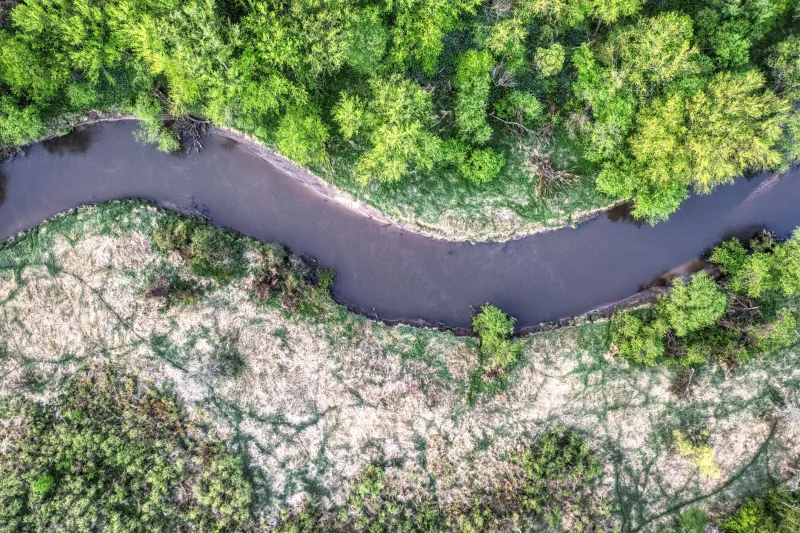
The loss of riparian tree canopy amplifies this effect dramatically. Mature streamside trees provide critical shade that can reduce summer water temperatures by 5 to 10 degrees. As urban development eliminates these buffers, rivers are left fully exposed to direct solar loading for hours each day. In cities across the Sun Belt and mid-Atlantic, rivers that once supported diverse cold-water assemblages now function as warm-water systems during summer months — fundamentally altered not by chemical pollution, but by the thermal consequences of how we have built our landscapes.
Regulatory Gaps and the Enforcement Deficit
Despite the documented severity of thermal pollution, the regulatory landscape remains fragmented. The Environmental Protection Agency has not updated its national water quality criteria for temperature in a comprehensive way since the 1970s. State standards vary enormously, with some states maintaining rigorous, ecologically grounded thermal limits and others relying on broad classifications that offer minimal protection for sensitive species.
The variance provisions within Section 316 have been widely criticized by environmental attorneys and conservation scientists as mechanisms that effectively allow industrial facilities to negotiate their way out of compliance. When permitting agencies lack the resources or political will to enforce existing standards, the burden falls on river ecosystems — and the communities that depend on them.
Federal climate adaptation planning has only recently begun to incorporate thermal stress as a primary driver of aquatic ecosystem decline. The 2023 National Fish Habitat Action Plan acknowledges temperature as a critical stressor, but translating that acknowledgment into enforceable, climate-adjusted permit conditions remains an ongoing challenge.
Cooling Strategies That Are Beginning to Work
The picture is not without cause for cautious optimism. Across the country, communities, utilities, and conservation organizations are developing and testing interventions that address thermal pollution from multiple directions.
Riparian reforestation programs — the systematic planting of native trees and shrubs along stream corridors — have demonstrated measurable cooling effects within five to ten years of establishment. In Oregon's Willamette Valley, coordinated riparian planting efforts along agricultural tributaries have reduced summer stream temperatures by as much as 7°F in reaches where canopy closure has been achieved. The Clean River Alliance and allied organizations have long advocated for expanding these programs with federal cost-share incentives that make participation accessible to small landowners.
Urban stormwater management is evolving as well. Green infrastructure approaches — bioswales, permeable pavement, rain gardens, and detention basins designed with cooling function in mind — can intercept hot stormwater before it reaches stream channels. Several municipalities, including Portland, Oregon, and Philadelphia, Pennsylvania, have incorporated thermal reduction targets into their green infrastructure planning frameworks.
For power plants, the most effective long-term solution is the transition to closed-loop cooling systems, which recirculate water internally rather than continuously withdrawing and discharging from rivers. These systems reduce both withdrawal volumes and thermal discharge temperatures significantly. While the capital costs are substantial, the regulatory pressure to upgrade aging once-through cooling infrastructure is slowly building, particularly as climate change erodes the margin between permitted discharge temperatures and river-wide thermal thresholds.
A River's Temperature Is a Measure of Our Choices
Thermal pollution is, at its core, an accountability problem. The heat entering America's rivers does not arrive by accident — it is the direct consequence of infrastructure decisions, land-use patterns, and regulatory frameworks that have consistently failed to treat river temperature as a non-negotiable ecological limit.
As climate change compresses the thermal tolerance window for cold-water species, the urgency of addressing both industrial discharges and urban heat contributions is intensifying. Rivers do not have the luxury of waiting for comprehensive federal reform. The trout, the salmon, the stoneflies, and the communities that have built their identities around healthy cold-water rivers are already operating in a narrowing margin.
Protecting that margin — through stronger permit conditions, accelerated riparian restoration, and climate-informed standards — is not a distant aspiration. It is an immediate obligation to the living systems that make these rivers worth restoring in the first place.